Pneumatic Haptic Sleeve for Guiding Wrist Rehabilitation

Wearable robots with haptic feedback and low-profile electronics can enhance rehabilitation by providing a more intuitive and comfortable experience.
In this project, we designed and fabricated a pneumatic sleeve that delivers directional tactile cues to guide wrist range-of-motion exercises for stroke rehabilitation.
Device Overview
The sleeve consists of six TPU air pouches, flexible and inflexible fabric layers, Velcro straps, pneumatic tubing, and electronic control units.
Each air pouch was made from 6-mil TPU layers heat-sealed around a Mylar spacer, creating a 3 cm-diameter inflatable chamber. The outer layer (taffeta) restricts outward expansion, allowing inward pressure on the forearm for clear tactile feedback.
Velcro connections ensure a secure and adjustable fit for users with different forearm sizes. The system uses a 6-port solenoid valve (12 V) with MOSFET drivers controlled by PWM signals.
An IMU sensor (Pololu miniIMU-9 v6) mounted on a glove measures wrist angle in real time.
Control Logic
Two microcontrollers (Arduino Uno and Elegoo Uno) communicate via serial connection.
- One processes IMU data to estimate wrist orientation.
- The other controls valve sequences that inflate the pouches.
When the wrist angle is below the target, the inner pouches inflate sequentially to encourage outward motion.
When the angle is above the target, the outer pouches inflate to guide the wrist back.
A small dead zone (± 2–5°) prevents unnecessary actuation near the target position.
Results
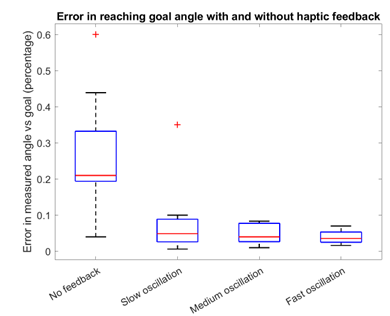
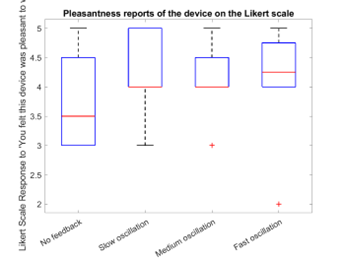
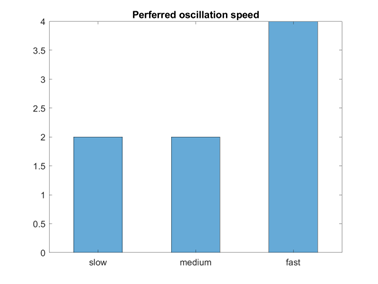
The prototype successfully produced clear and comfortable directional haptic cues during demo day, effectively guiding users toward target wrist angles. From the survey after the demo, we got the feedback.
Discussion and Future Work
The pneumatic sleeve demonstrates the potential of soft, wearable haptic feedback in rehabilitation.
Future work will focus on integrating fluidic oscillators to replace electronic valves, reducing bulk and improving portability.
The design principles can be extended to other body joints and haptic-feedback applications in soft robotics.
Acknowledgments
Thanks to Professor Morimoto, TA Robert, and the Morimoto Lab for their support and materials.